Checkers Variants
Checkers Variants Advanced Reply Record: 17x29 Route Repair Turn
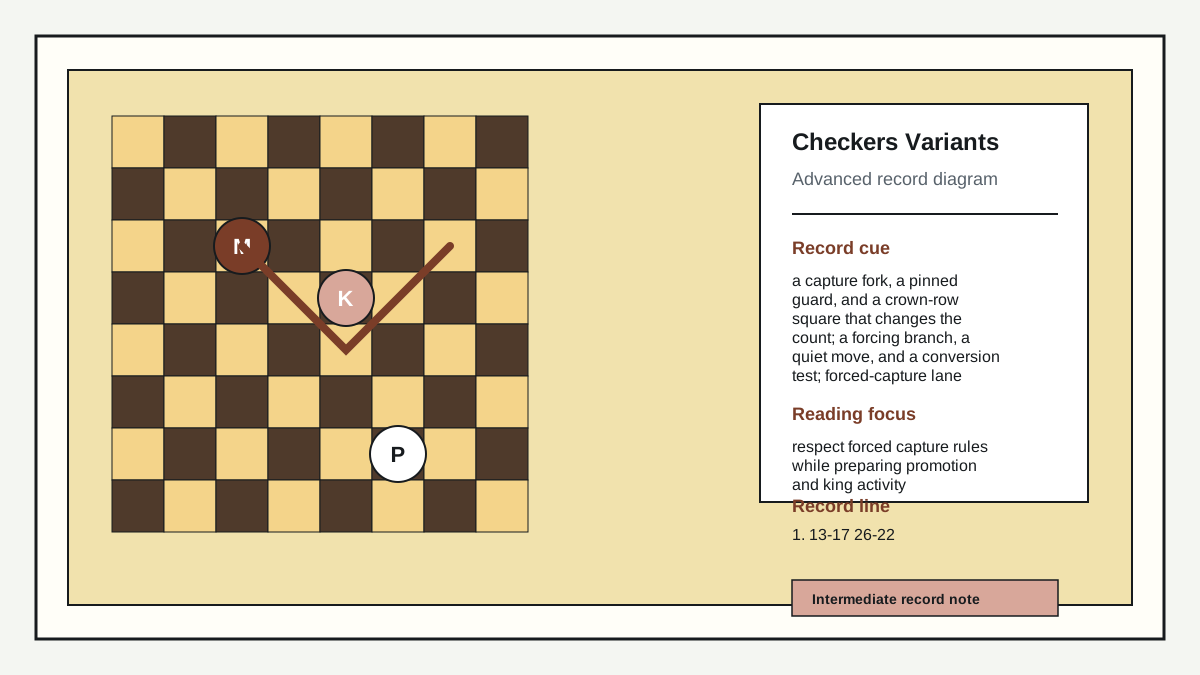
1. 13-17 26-22Main mistake: counting the first jump but not the return capture
Scan the record in three passes: first quote 1. 13-17 26-22; 2. 9-18 29-25, then explain diagonal movement, mandatory captures, multi-jumps, promotion, and king mobility, then use the replay checkpoint to split the line into candidate plan, reply, and timing change before reading further; only after that should the reader then use the source shortcut only after the local rule cue is clear.
1. 13-17 26-22
Start with the notation and level shape, then use the diagram as a check on the same position.
1. 13-17 26-22Black takes a center square for the turning-point record; White keeps the back rank intact.
Advanced records follow multi-capture branches, king activity, and conversion choices across several numbered squares.
Find a new king route, two diagonals, and a material trade that may lose tempo; a forcing branch, a quiet move, and a conversion test; forced-capture lane 17x29, back-rank guard 22, and promotion square 13; diagonal movement, mandatory captures, multi-jumps, promotion, and king mobility check for the turning-point record, then test the mistake before opening source references.
The repair study task teaches candidate moves, tempo, defensive replies, and the moment the plan changes. Board cue: forced-capture lane 17x29, back-rank...
10 entries; use the notation before reading commentary.
a new king route, two diagonals, and a material trade that may lose tempo; a forcing branch, a...
Compare notation and position type after the lesson line is clear; do not treat this fragment as a copied score.
Advanced records follow multi-capture branches, king activity, and conversion choices across several numbered squares.
Say the first line aloud, then match it to the board diagram.
Keep this failure in view while replaying the final two entries.
Stay in Checkers Variants and compare the same intermediate record study topic at intermediate level; the rules and notation stay familiar while the record shape gets easier or harder.
What this record looks like
An advanced turning point: route repair record should be dense without becoming opaque, so this line ties forced-capture lane 17x29, back-rank guard 22, and promotion square 13 to a long-term structure check. Board cue: forced-capture lane 17x29, back-rank guard 22, and promotion square 13. Rule check: diagonal movement, mandatory captures, multi-jumps, promotion, and king mobility. The notation uses Draughts numeric move and capture notation. The first two entries are 1. 13-17 26-22; 2. 9-18 29-25, which keeps the explanation tied to candidate moves, tempo, defensive replies, and the moment the plan changes.
Position cue
a new king route, two diagonals, and a material trade that may lose tempo; a forcing branch, a quiet move, and a conversion test; forced-capture lane 17x29, back-rank guard 22, and promotion square 13; diagonal movement, mandatory captures, multi-jumps, promotion, and king mobility check for the turning-point record
Unique asset
A self-authored SVG study diagram for this Checkers Variants turning-point record marks forced-capture lane 17x29, back-rank guard 22, and promotion square 13. It is paired with Draughts numeric move and capture notation beginning 1. 13-17 26-22; 2. 9-18 29-25. The public reference image pub-draughts-closeup gives readers an open-gallery board or piece reference for the same game family.
Checkers Variants rule check
Check this before the outside record: read 1. 13-17 26-22, name the rule source, test the position cue, and keep the mistake visible.
Open Federation Mondiale du Jeu de DamesFederation Mondiale du Jeu de Dames is the rule source to open first; use it for legal vocabulary before comparing this advanced record.
Numeric move and capture notation is a rule-checking device: hyphen moves and x captures identify whether a sequence was a quiet move, forced jump, or promotion route. In this lesson the first line is 1. 13-17 26-22.
Men move diagonally, captures are mandatory in many variants, multi-jumps can decide the whole turn, and kings often change mobility after promotion. The exact rule depends on the variant. For this page, apply it to a new king route, two diagonals, and a material trade that may lose tempo; a forcing branch, a quiet move, and a conversion test;.
The common trap is moving a guard or king before checking mandatory capture. A record line that ignores the forced jump is not just weak; it may be illegal. Here the reader's mistake check is counting the first jump but not the return capture.
How to read this lesson
First replay: 1. 13-17 26-22. Keep the line short enough to say aloud before judging whether the move is good.
Then inspect: The repair study task teaches candidate moves, tempo, defensive replies, and the moment the plan changes. Board cue: forced-capture lane 17x29, back-rank guard 22, and promotion square 13. Level job: the lesson treats the record like a study...
Outside check: Linked as an external database for real games. Article records here remain teaching fragments and do not copy tournament game scores.
Numbered-square move and capture notation
Read the sample as a draughts-style teaching notation line, not as a complete official variant score sheet.
1. 12-16 25-21Beginner checkers-variant records show one forced capture or promotion route and name the back-rank habit to avoid.
Intermediate records compare a legal waiting move with the capture priority or promotion race that changes timing.
Advanced records follow multi-capture branches, king activity, and conversion choices across several numbered squares.
Annotated Record Fragment
Checkers Variants record reader
Checkers Variants advanced record fragment starts from 1. 13-17 26-22. It is a composed teaching fragment, not a tournament score; compare outside records for rules, notation, and position type before treating it as proof.
1. 13-17 26-22Black takes a center square for the turning-point record; White keeps the back rank intact.
Key entry: connect it to a new king route, two diagonals, and a material trade that may lose tempo; a forcing branch, a quiet move, and a conversion test; forced-capture lane 17x29, back-rank guard 22, and promotion square 13; diagonal movement, mandatory captures, multi-jumps, promotion, and king mobility check for the turning-point record.- Position cue
- a new king route, two diagonals, and a material trade that may lose tempo; a forcing branch, a quiet move, and a conversion test; forced-capture lane 17x29, back-rank guard 22, and promotion square 13; diagonal movement, mandatory captures, multi-jumps, promotion, and king mobility check for the turning-point record
- Mistake test
- counting the first jump but not the return capture
| Move | Notation | Annotation | Reader Cue |
|---|---|---|---|
| 1 | 13-17 26-22 | Black takes a center square for the turning-point record; White keeps the back rank intact. | Key entry: connect it to a new king route, two diagonals, and a material trade that may lose tempo; a forcing branch, a quiet move, and a conversion test; forced-capture lane 17x29, back-rank guard 22, and promotion square 13; diagonal movement, mandatory captures, multi-jumps, promotion, and king mobility check for the turning-point record. |
| 2 | 9-18 29-25 | Both sides develop before a capture is forced in this turning-point record. | Pause here and name the rule cue, not only the active move. |
| 3 | 17x29 25x9 | The first capture sequence teaches why forced jumps control the record. | Compare with the previous reply before moving on. |
| 4 | 14-19 28-24 | Black prepares promotion pressure instead of taking a loose edge piece. | Pause here and name the rule cue, not only the active move. |
| 5 | 18x28 24x14 | The intermediate turn compares material with tempo toward the king row. | Compare with the previous reply before moving on. |
| 6 | 10-15 31-27 | White repairs the diagonal before the next forced jump arrives. | Pause here and name the rule cue, not only the active move. |
| 7 | 19-31 22-14 | The branch shows how a single waiting move can change capture priority. | Compare with the previous reply before moving on. |
| 8 | 15x29 26x19 | Both sides count the whole capture chain before choosing the first jump. | Pause here and name the rule cue, not only the active move. |
| 9 | 9-13K 27-24 | The advanced note marks promotion and king mobility as the evaluation swing. | Compare with the previous reply before moving on. |
| 10 | 13x14 | The teaching line finishes when the new king controls both diagonals. | Finish check: explain why counting the first jump but not the return capture is unsafe here. |
- Move 1
13-17 26-22Black takes a center square for the turning-point record; White keeps the back rank intact.
Key entry: connect it to a new king route, two diagonals, and a material trade that may lose tempo; a forcing branch, a quiet move, and a conversion test; forced-capture lane 17x29, back-rank guard 22, and promotion square 13; diagonal movement, mandatory captures, multi-jumps, promotion, and king mobility check for the turning-point record. - Move 2
9-18 29-25Both sides develop before a capture is forced in this turning-point record.
Pause here and name the rule cue, not only the active move. - Move 3
17x29 25x9The first capture sequence teaches why forced jumps control the record.
Compare with the previous reply before moving on. - Move 4
14-19 28-24Black prepares promotion pressure instead of taking a loose edge piece.
Pause here and name the rule cue, not only the active move. - Move 5
18x28 24x14The intermediate turn compares material with tempo toward the king row.
Compare with the previous reply before moving on. - Move 6
10-15 31-27White repairs the diagonal before the next forced jump arrives.
Pause here and name the rule cue, not only the active move. - Move 7
19-31 22-14The branch shows how a single waiting move can change capture priority.
Compare with the previous reply before moving on. - Move 8
15x29 26x19Both sides count the whole capture chain before choosing the first jump.
Pause here and name the rule cue, not only the active move. - Move 9
9-13K 27-24The advanced note marks promotion and king mobility as the evaluation swing.
Compare with the previous reply before moving on. - Move 10
13x14The teaching line finishes when the new king controls both diagonals.
Finish check: explain why counting the first jump but not the return capture is unsafe here.
Common Mistake
Mistake to test: counting the first jump but not the return capture. Replay 1. 13-17 26-22 against a new king route, two diagonals, and a material trade that may lose tempo; a forcing branch, a, then name the rule or reply that prevents it.
CommentaryOpen detailed replay notesFirst reading pass for Checkers Variants Turning Point: Route Repair: Match move one 13-17 26-22; move two 9-18...
Commentary
First reading pass for Checkers Variants Turning Point: Route Repair: Match move one 13-17 26-22; move two 9-18 29-25 to forced-capture lane 17x29, back-rank guard 22, and promotion square 13. Then name the diagonal movement, mandatory captures, multi-jumps, promotion, and king mobility check before reading any branch.
The turning point: route repair teaching point is not volume of moves. It is whether 17x29 still works after 25x9 is named.
The tempting move changes the board now, but a forward move can lose instantly if the mandatory capture chain has not been counted. In this fragment, that difference is visible at 17x29.
A player importing habits from another board game should slow down at forced-capture lane 17x29, back-rank guard 22, and promotion square 13. The safe bridge is diagonal movement, mandatory captures, multi-jumps, promotion, and king mobility.
Exit test: quote move one 13-17 26-22; move two 9-18 29-25. Then explain why counting the first jump but not the return capture was tempting before opening the next same-game record.
PracticeOpen study questions4 questions for checking the record after replay.
Study Questions
- Which pressure detail in 1. 13-17 26-22; 2. 9-18 29-25 first reveals the turning point: route repair problem?
- What would change in this turning point: route repair record if the reply 25x9 arrived one move earlier?
- In the turning point: route repair position, which candidate around 17x29 is tempting, and what part of diagonal movement, mandatory captures, multi-jumps, promotion, and king mobility makes 25x9 punish it?
- Checkers Variants: How would you explain the diagonal movement, mandatory captures, multi-jumps, promotion, and king mobility check to someone who only knows chess or checkers notation?
What different record levels look like
Compare the same game family across level examples before choosing the next lesson. The active card marks this page's level.
1. 14-18 27-23- CaptureStart from 1. 14-18 27-23 and name the shared cue: a new king route, two diagonals, and a material trade.
- ReturnCompare the reply around a new king route, two diagonals, and a material trade before trusting the first plan.
- King routeCarry the branch to the mistake test: making a king route before the man behind it has a safe square.
6 entries, 1 plan + 1 reject: one visible plan, one rule cue, and one mistake to stop before.
- Length
- 6 annotated entries
- Branch load
- Single line, no side branch
- Candidates
- 1 plan + 1 reject
- Judgment
- Legal cue first: numbered-square notation, capture obligation, promotion route, king movement, and variant boundary
- Depth
- Two-move window
- Read for
- Read one plan aloud, match it to the board cue, and stop at the first unsafe reply.
- Watch
- making a king route before the man behind it has a safe square
- Next cue
- Move up after you can name the rule cue without rereading the note.
Replay 1. 14-18 27-23, name a new king route, two diagonals, and a material trade that may lose, then reject making a king route before the man behind it has a safe square.
Beginner Checkers Variants records are a short line built from 1. 14-18 27-23: one rule cue, one visible plan, and one obvious mistake around a new king route, two diagonals, and a material trade that may lose tempo; one visible.
- Opening line
- Start with 1. 14-18 27-23; keep the first reply visible.
- Rule cue
- Point to numbered-square notation, capture obligation, promotion route, king movement, and variant boundary before judging the move.
- First trap
- Stop at making a king route before the man behind it has a safe square instead of exploring side branches.
- Ready check
- Move on only after the rule cue can be named from memory.
Beginner checkers-variant records show one forced capture or promotion route and name the back-rank habit to avoid.
Intermediate recordCheckers Variants Intermediate Reply Record: 28x8 Safe Reply Turn1. 24-28 5-1- CaptureStart from 1. 24-28 5-1 and name the shared cue: a new king route, two diagonals, and a material trade.
- ReturnCompare the reply around a new king route, two diagonals, and a material trade before trusting the first plan.
- King routeCarry the branch to the mistake test: making a king route before the man behind it has a safe square.
8 entries, 2 candidate replies: add a reply comparison before deciding which plan survives.
- Length
- 8 annotated entries
- Branch load
- Main line plus reply branch
- Candidates
- 2 candidate replies
- Judgment
- Timing, safety, and shape all get judged
- Depth
- Turning-point window
- Read for
- Compare two candidate plans, then explain why the reply changes timing or safety.
- Watch
- making a king route before the man behind it has a safe square
- Next cue
- Move up after you can compare both plans before seeing the answer.
Compare both replies around a new king route, two diagonals, and a material trade that may lose; explain where making a king route before the man behind it has a safe square changes the plan.
Intermediate Checkers Variants records keep the same cue near a new king route, two diagonals, and a material trade that may lose tempo; two candidate, then add candidate replies, a turning point, and one comparison line after 1. 24-28 5-1.
- Main line
- Anchor the comparison at 1. 24-28 5-1, not at a loose theme name.
- Candidate pair
- Keep two replies alive until the timing or safety test resolves them.
- Turning point
- Explain how making a king route before the man behind it has a safe square changes the value of the first plan.
- Replay task
- Before opening the answer, say which candidate survives and why.
Intermediate records compare a legal waiting move with the capture priority or promotion race that changes timing.
Advanced recordCheckers Variants Advanced Reply Record: 16x28 Safe Reply Turn1. 12-16 25-21- CaptureStart from 1. 12-16 25-21 and name the shared cue: a new king route, two diagonals, and a material trade.
- ReturnCompare the reply around a quiet diagonal move, capture priority, and a man that before trusting the first plan.
- King routeCarry the branch to the mistake test: moving a back-rank guard before checking the forced capture chain.
10 entries, 3+ candidate points: hold the branch, quiet preparation, and conversion test together.
- Length
- 10 annotated entries
- Branch load
- Forcing branch, quiet prep, conversion
- Candidates
- 3+ candidate points
- Judgment
- Every move can change the final evaluation
- Depth
- Full branch with source comparison
- Read for
- Hold the forcing branch, quiet preparation, and conversion test in the same replay.
- Watch
- moving a back-rank guard before checking the forced capture chain
- Next cue
- Stay here when you want dense branches, not just legal-move recognition.
Annotate the quiet move after 1. 12-16 25-21; prove the conversion still survives moving a back-rank guard before checking the forced capture chain.
Advanced Checkers Variants records turn 1. 12-16 25-21 into a branch: forcing move, quiet preparation, conversion test, and source comparison around a quiet diagonal move, capture priority, and a man that needs a safe square; a forcing.
- Forcing branch
- Track the pressure line from 1. 12-16 25-21 without skipping replies.
- Quiet move
- Mark the preparation move that does not look urgent but keeps the branch alive.
- Conversion test
- Check whether moving a back-rank guard before checking the forced capture chain appears only after the defender's best reply.
- Review task
- Write the moment pressure becomes conversion, then compare an outside record.
Advanced records follow multi-capture branches, king activity, and conversion choices across several numbered squares.
Checkers Variants advanced record fragment starts from 1. 13-17 26-22. It is a composed teaching fragment, not a tournament score; compare outside records for rules, notation, and position type before treating it as proof.
Compare this Checkers Variants lesson with real records
Use Toernooibase / KNDB to compare numbered-square notation, capture obligation, promotion route, king movement, and variant boundary. This advanced lesson stays an original teaching example, not a copied score, table log, SGF file, or named-player record.
1. 13-17 26-22numbered-square notation, capture obligation, promotion route, king movement, and variant boundary
- AMatch the source type
Open Toernooibase / KNDB as a real record index and decide whether you are comparing a real record index, a rule source, or a position reference before judging the lesson.
- BMatch notation before quality
Hold the article sample 1. 13-17 26-22 beside the outside source. Compare notation shape, turn order, and record length before deciding whether the moves teach the same problem.
- CMatch the position job
Use the cue a new king route, two diagonals, and a material trade that may lose tempo; a forcing branch, a quiet move, and a. The outside material only helps if it trains the same board, route, tile, threat, capture, or rule-position job.
- DKeep the lesson original
Use outside move lists, player names, event labels, table logs, SGF files, or database commentary only as context checks; then return to the article's own mistake check: counting the first jump but not the return capture.
Checkers Variants classic record bridge
Use 1. 13-17 26-22 as the page's working line, then compare advanced record shape against Toernooibase / KNDB, the classic anchor, and the trained mistake before opening a full outside score.
1. 13-17 26-22a new king route, two diagonals, and a material trade that may lose tempo; a forcing branch, a quiet move, and a conversion test; forced-capture lane 17x29, back-rank guard 22, and promotion square 13; diagonal movement, mandatory captures, multi-jumps, promotion, and king mobility check for the turning-point record
Mistake checkcounting the first jump but not the return capture
Open Toernooibase / KNDBCompare legal movement, capture obligation, square numbers, promotion route, and whether the article uses the same draughts variant.
Open Federation Mondiale du Jeu de DamesBeginner pages compare one mandatory capture; intermediate pages compare waiting moves with capture priority; advanced pages compare longer capture chains and king conversion.
Open Toernooibase / KNDBIn the outside source, look only for the same first plan around 1. 13-17 26-22; ignore long branches until the mistake can be named plainly.
Compare whether the outside line tests the same reply choice and whether counting the first jump but not the return capture appears one exchange later.
Use outside records to compare branch discipline and conversion timing, then keep this original teaching example separate from outside scores.
This bridge is a reader-facing comparison guide. The article remains a composed teaching fragment and original teaching example, separate from outside scores, player metadata, event labels, table logs, SGF files, database commentary, and source commentary.
Checkers Variants real record check plan
Use this plan after the lesson replay: compare 1. 13-17 26-22 with Toernooibase / KNDB, then match the position terms, level job, and mistake pattern before trusting an outside record as a useful comparison.
1. 13-17 26-22new king route two diagonals material trade may lose tempo forcing branch quiet move conversion test
A useful outside Checkers Variants record should share the notation shape 1. 13-17 26-22, the same position job around new king route two diagonals material trade may lose tempo forcing branch quiet move conversion test, and the trained mistake counting first jump but not return capture.
Keep outside scores, player names, event labels, table logs, SGF files, database notes, and source commentary separate from the article body.
Toernooibase / KNDB can prove that real Checkers Variants records exist in a comparable notation or database format. Use it to compare numbered-square notation, capture obligation, promotion route, king movement, and variant boundary, record density, and level shape; it does not prove that this advanced record line is copied from that source.
This page uses 1. 13-17 26-22 as a compact Checkers Variants study line for new king route two diagonals material trade may lose tempo forcing branch quiet move conversion test. It teaches a level-specific record shape and a mistake check; it is not presented as a copied score from Toernooibase / KNDB.
Compare notation family, turn order, numbered-square notation, capture obligation, promotion route, king movement, and variant boundary, record level, and the mistake cue counting first jump but not return capture. A useful outside record may share the same problem without sharing every move.
Keep outside scores, player names, event labels, table logs, SGF files, database notes, and source commentary separate from the article body. Use Toernooibase / KNDB to check record reality, then return to the article's own annotation rather than mixing outside metadata into the lesson.
- SourceOpen the right kind of record source
Start with Toernooibase / KNDB as a real record index. Decide whether the outside page is a real record index, rule document, position reference, table log, or SGF-style record before comparing moves.
- LineMatch the first notation line
Hold 1. 13-17 26-22 beside the outside source. The first check is notation family, turn order, and record length, not whether the whole outside score is identical.
- PositionMatch the position terms
Search by new king route two diagonals material trade may lose tempo forcing branch quiet move conversion test. The outside material helps only when it trains the same numbered-square notation, capture obligation, promotion route, king movement, and variant boundary.
- LevelMatch the record level
Look for a dense Checkers Variants record after 1. 13-17 26-22 with a forcing branch, quiet preparation, and conversion test; compare branch discipline before borrowing any outside evaluation.
- SeparateKeep the teaching line separate
Treat this advanced lesson as an original teaching example, not a named game record or copied match score. Keep outside scores, player names, event labels, table logs, SGF files, database notes, and source commentary separate from the article body.
Treat this advanced lesson as an original teaching example, not a named game record or copied match score.
Checkers Variants lesson references
Checkers Variants advanced record starts from 1. 13-17 26-22; compare rule language, record context, classic position shape, and public image evidence before using outside material.
Use Federation Mondiale du Jeu de Dames to check legal vocabulary and Numbered-square move and capture notation before reading 1. 13-17 26-22.
- Compare
- Compare the rule cue in a new king route, two diagonals, and a material trade that may lose tempo; a forcing branch, a quiet move, and a conversion test; forced-capture lane 17x29, back-rank guard 22, and promotion square 13; diagonal movement, mandatory captures, multi-jumps, promotion, and king mobility check for the turning-point record with numbered-square notation, capture obligation, promotion route, king movement, and variant boundary; the article's notation sample is the first thing to keep stable.
- Boundary
- The rule source supports vocabulary and legality checks while this page stays a composed teaching fragment for Checkers Variants.
Use Toernooibase / KNDB to compare record shape, source type, and the trained mistake: counting the first jump but not the return capture.
- Compare
- Match 1. 13-17 26-22, turn order, record length, and the position job before judging whether an outside record trains the same decision.
- Boundary
- Outside records are context checks; the move line here remains an original teaching example, not a named-player score.
Numbered-square capture obligation and promotion timing keeps a new king route, two diagonals, and a material trade that may lose tempo; a forcing branch, a quiet move, and a conversion test; forced-capture lane 17x29, back-rank guard 22, and promotion square 13; diagonal movement, mandatory captures, multi-jumps, promotion, and king mobility check for the turning-point record connected to a stable board, route, tile, or threat shape.
- Compare
- Compare legal movement, capture obligation, square numbers, promotion route, and whether the article uses the same draughts variant.
- Boundary
- The anchor is a lookup guide for study shape; it does not turn this composed fragment into a copied score.

Wikimedia Commons checkers closeup photo is the public visual reference for this Checkers Variants page; Wikimedia Commons checkers closeup photo is the public-library context image for this Checkers Variants lesson: it helps readers recognize a close-up checkers board and pieces reference for capture, promotion, and kinging lessons; used as game-material context before the reader checks the article-specific study diagram. It gives board or piece context only; the article-specific line remains in the self-authored study diagram beginning 1. 13-17 26-22; 2. 9-18 29-25.
- Compare
- Use the image for board, piece, route, tile, or surface context, then use the article diagram and 1. 13-17 26-22 for the exact composed line.
- Boundary
- The public image supports context and license transparency; it is separate from the article-specific study diagram and move sequence.
Read this as a composed teaching fragment for Checkers Variants turning-point record: built to slow down a dense branch, beginning 1. 13-17 26-22; 2. 9-18 29-25. It is not a tournament score; use it as an advanced study-note example before opening external records. The page-specific mistake check is counting the first jump but not the return capture.
- Compare
- Use outside material to check numbered-square notation, capture obligation, promotion route, king movement, and variant boundary, source type, and position similarity before returning to the article line.
- Boundary
- Use database game scores, event metadata, player names, or complete move sequences only as context checks; this advanced lesson stays an original teaching example, separate from outside scores, player metadata, and source commentary.
- Notation and turn order: 1. 13-17 26-22.
- Position job and trained mistake: a new king route, two diagonals, and a material trade that may lose tempo; a forcing branch, a quiet move, and a conversion test; forced-capture lane 17x29, back-rank guard 22, and promotion square 13; diagonal movement, mandatory captures, multi-jumps, promotion, and king mobility check for the turning-point record / counting the first jump but not the return capture.
- Image fit, source URL, license label, and whether the public image matches the same game family.
- Outside scores, player metadata, event labels, table logs, SGF files, and database commentary stay outside the article body.
- A public image is visual context, not proof that the composed move sequence happened in a real match.
- A classic position anchor helps comparison; it is not a claim that this page reproduces that exact external record.
Classic lookup cueClassic lookup cue for Checkers VariantsToernooibase / KNDB: search cue and four comparison checks.
Classic lookup cue for Checkers Variants
Use Toernooibase / KNDB as a real-record or position lookup context. This page remains a composed teaching fragment and is not a copied tournament score, named-player record, table log, or external database entry.
Toernooibase / KNDB: Checkers Variants Intermediate record study + new king route two diagonals material trade may lose tempo + 1. 13-17 26-22 + checkers-variants-advanced-turning-point-route-repair-17x29Open Toernooibase / KNDBStart with new king route two diagonals material trade may lose tempo. The goal is to find the same kind of board, tile, route, or threat problem before looking for an exact score.
Use the sample 1. 13-17 26-22 to compare notation form, move length, and record density against external material.
Keep this mistake visible while comparing: counting first jump but not return capture. A useful outside record should make that decision easier to discuss.
Open Toernooibase / KNDB for real records or position context, but keep this lesson separate from copied match scores and named-player claims.
Record exemplarCompare the lesson with a real source type2 source-backed exemplars for this game family.
Compare the lesson with a real source type
These exemplars explain what to compare in a real record index, rules source, or position reference before judging this composed fragment. They keep source lookup useful without copying outside records.
Search by numbered-square notation, then compare forced capture, multi-jump sequence, promotion route, and variant rule family.
Beginner: one capture lane. Intermediate: timing and promotion race. Advanced: multi-capture branch, king activity, and conversion.competition rules boundaryNumbered-Square Rule ExemplarUse the rules document to check numbered-square movement, mandatory capture, promotion, and king mobility before comparing a lesson with a database score.
Beginner: one forced capture. Intermediate: timing and promotion pressure. Advanced: multi-capture branch, king mobility, and conversion.Classic position anchorsUse known study shapes before searching for exact scores2 anchors; compare without copying a real score.
Use known study shapes before searching for exact scores
These anchors name stable rule, opening, route, tile, or board-position shapes for this game family. They help readers compare this composed fragment with external material without copying a real score.
Use this anchor when a checkers-variant page teaches numbered-square notation, capture priority, and why the back-rank guard matters.
Compare legal movement, capture obligation, square numbers, promotion route, and whether the article uses the same draughts variant.External numbered-square game lookupDraughts Database AnchorUse this anchor when a reader wants to compare a teaching fragment with real game records after checking notation and variant.
Compare numbered-square sequence, capture chain, promotion timing, and whether the outside game uses the same board and rule family.Curated reference packWhere to verify the record context2 game-specific references kept separate from the lesson.
Where to verify the record context
These links give the reader a small, game-specific reference trail before using a real database, rule source, or public board reference. They support comparison; they are not copied into this lesson.
Use this when a checkers-variant article teaches numbered-square notation, forced capture, promotion timing, or a multi-capture branch.
Compare numbered-square notation, capture priority, back-rank guard, promotion route, and whether the outside game uses the same draughts variant.rules and positionInternational Draughts Rule NoteUse this for board numbering, men, kings, movement, capture, promotion, and the difference between a teaching notation line and a full score sheet.
Compare legal movement and capture obligations before using a composed fragment to discuss timing or promotion.Comparison pathHow to compare this fragment with external records4 lookup steps; compare, do not copy a real score.
How to compare this fragment with external records
Use this as a reading route before opening external databases or classic-position references. The goal is comparison, not copying a real score into this lesson.
- 1Match the notation shape
Start with Numbered-square move and capture notation and the sample 1. 13-17 26-22. Compare outside records only for notation shape before judging move quality.
- 2Anchor the same kind of position
Use this page cue: a new king route, two diagonals, and a material trade that may lose tempo; a forcing branch, a quiet move, and a conversion test; forced-capture lane 17x29, back-rank guard 22, and promotion square 13; diagonal movement, mandatory captures, multi-jumps, promotion, and king mobility check for the turning-point record Look for a similar board, tile, route, or threat problem, not an identical copied position.
- 3Read it as a advanced lesson
Compare record length, annotation density, and the trained mistake: counting the first jump but not the return capture. That is how this page explains what a advanced record is for.
- 4Keep lesson and outside record separate
Use Toernooibase / KNDB for real record lookup. This page remains a composed teaching fragment and is not a copied tournament score or named-player record.
Reference layerRules checked separately from the teaching fragment1 rule source link for notation and boundary checks.
Rules checked separately from the teaching fragment
These links support rule vocabulary, notation boundaries, and game-family context. They do not turn this composed study fragment into a tournament score or named-player record.
Record contextExternal records stay separate from this lessonToernooibase / KNDB: context only, not copied-score proof.
External records stay separate from this lesson
External draughts game records, tournament database context, and notation comparison for numbered-square records.
Linked as an external database for real games. Article records here remain teaching fragments and do not copy tournament game scores.
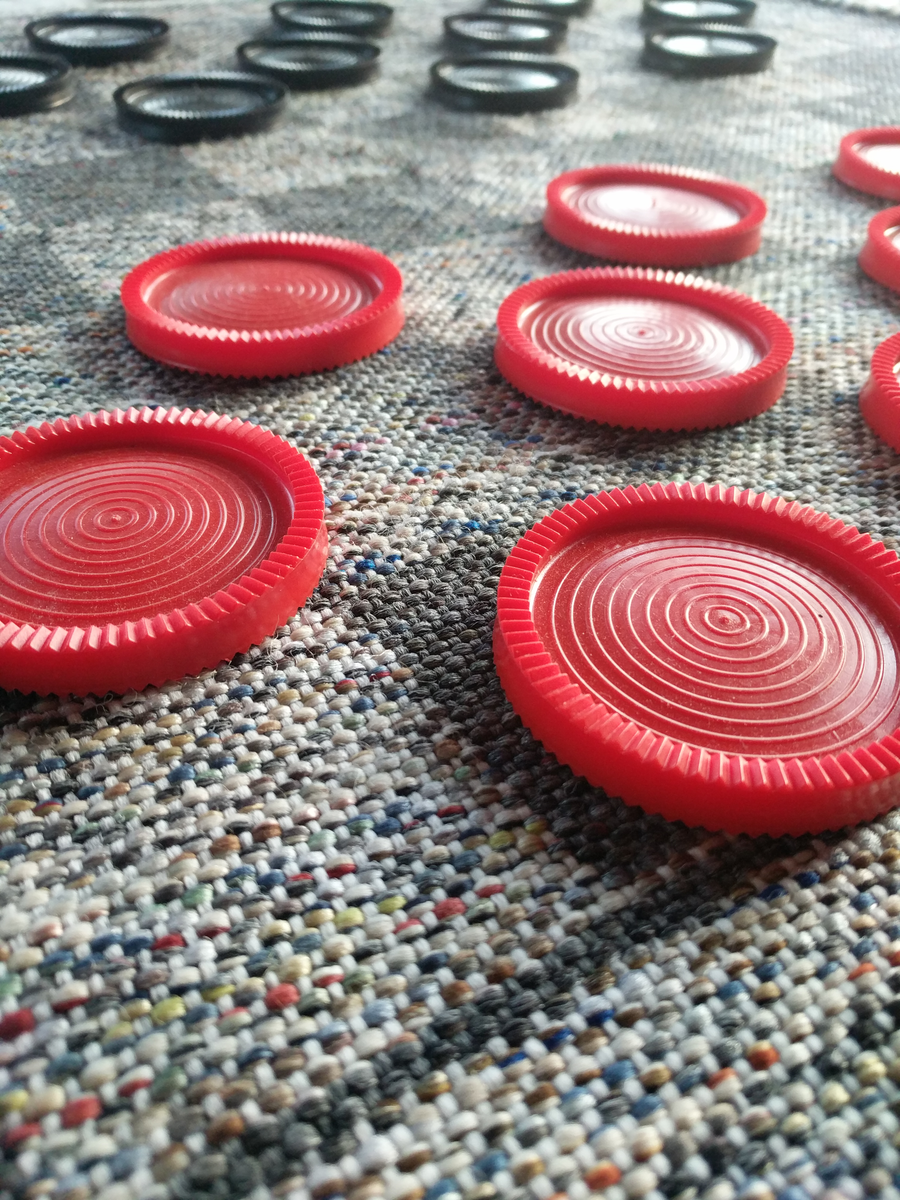
Public reference: Wikimedia Commons checkers closeup photo is the public-library context image for this Checkers Variants lesson: it helps readers recognize a close-up checkers board and pieces reference for capture, promotion, and kinging lessons; used as game-material context before the reader checks the article-specific study diagram. It gives board or piece context only; the article-specific line remains in the self-authored study diagram beginning 1. 13-17 26-22; 2. 9-18 29-25. Source: Wikimedia Commons checkers closeup photo. License: Wikimedia Commons freely licensed file. Source page. Source file
